Professional Memberships & Recognised By

What is a Facelift?
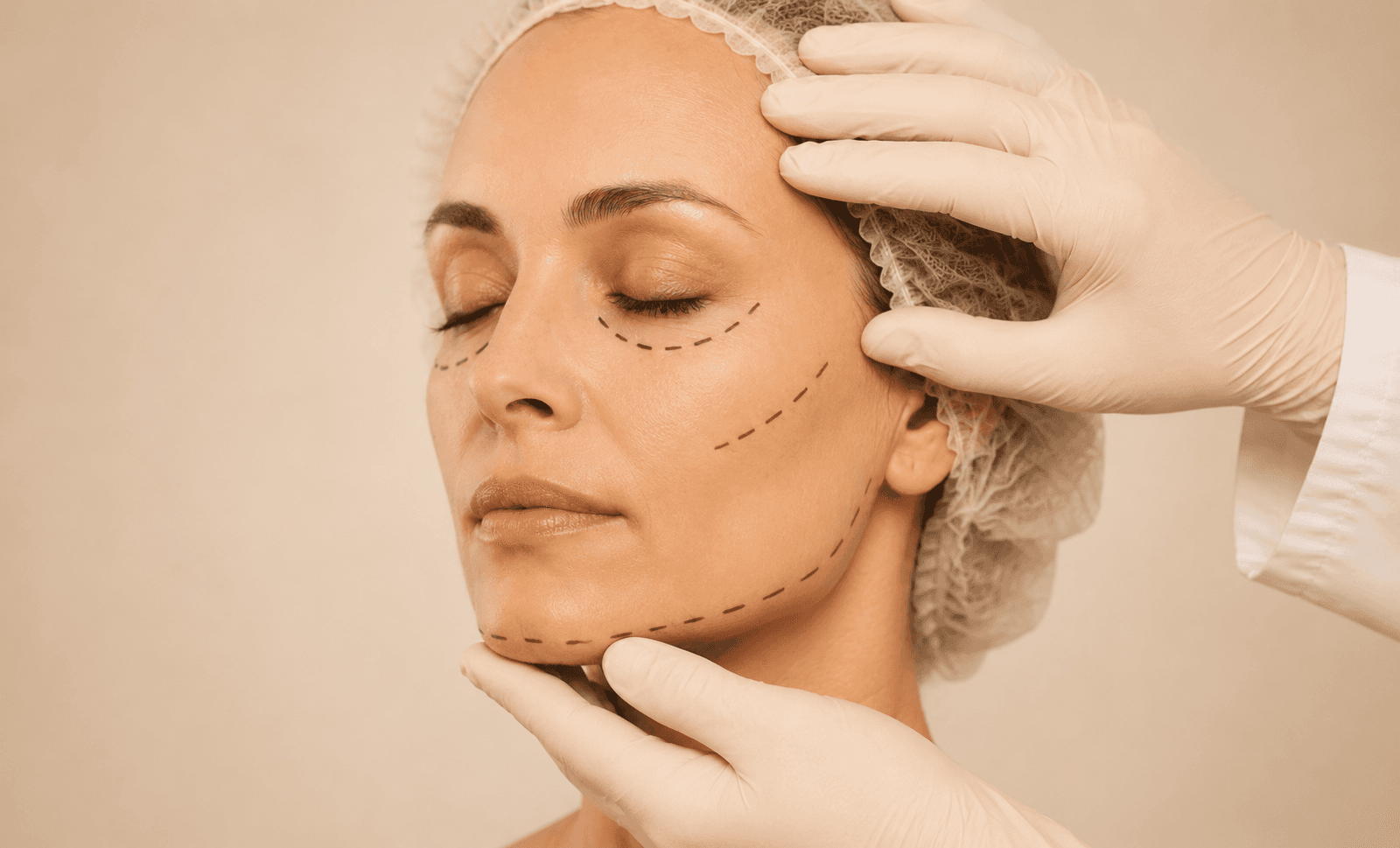
A facelift (rhytidectomy) is a procedure that aims to address sagging and laxity in the lower face and neck by repositioning underlying tissues and removing excess skin. Ageing is influenced by many factors, and a facelift addresses some but not all of them.
Modern approaches focus on a refreshed, natural appearance rather than a “pulled” look. Your consultant surgeon will explain what a facelift may realistically achieve for you.
Possible Benefits
Refreshed Appearance
Aims for a rested, refreshed look in the lower face.
Improved Contour
May help define the jawline and neck for some patients.
Natural Focus
Techniques aim for understated, natural-looking results.
Tailored Plan
The approach is individualised to your face.
Who Might Consider a Facelift?
A facelift may be considered by people in good general health who have noticeable laxity in the lower face or neck and realistic expectations. It does not stop the ageing process and is not suitable for everyone.
A qualified clinician will assess whether surgery, another treatment, or a combination may best suit your goals.

CONSULTANT LED CARE
Consultant Led, Individualised Care
A natural facelift result depends heavily on surgical experience and judgement. Your consultant plastic surgeon will tailor the technique to your face and discuss realistic, understated outcomes rather than dramatic change.
- GMC Specialist Register for Plastic Surgery
- Members of BAAPS and BAPRAS
- Considered, individualised advice
- Attentive aftercare and follow-up
All care is provided by consultant plastic surgeons on the GMC Specialist Register, operating in CQC-registered facilities.
What the Journey May Involve
Every patient is different; the steps below give a general sense of what care can involve. Your surgeon will explain what is right for you.
Consultation
A detailed discussion and facial assessment to understand your goals and consider suitable options.
Planning
We take time to understand your goals, review your medical history and agree an approach tailored to you.
Procedure
A facelift is usually performed under general anaesthetic; the technique and duration are tailored to you.
Recovery
You are supported closely afterwards, with clear guidance and direct access to your surgical team.
Follow-up
Follow-up appointments allow us to review your progress and answer any questions as you heal.
Recovery & Aftercare
Recovery varies between individuals. Swelling, bruising and a feeling of tightness are common in the early weeks and settle gradually. Detailed aftercare advice is provided. Please speak to a qualified clinician about anything that concerns you as you heal.
Initial downtime
Around 2 weeks
Return to social activities
Often 2 to 3 weeks
Exercise
Typically 4 to 6 weeks
Final result
Several months
Risks & Safety
A facelift can be associated with risks including bleeding, infection, changes in sensation, effects on the facial nerves, asymmetry and scarring. Your surgeon will explain these in full before you decide.
- All surgery carries some risk; your surgeon will explain these in full so you can give informed consent
- Care is provided by surgeons on the GMC Specialist Register for Plastic Surgery
- Procedures take place in CQC-registered facilities with clear safety protocols
- If you have any concerns, speak to a qualified clinician before proceeding
People Also Asked
Will a facelift look natural?
The aim is a refreshed, natural appearance. Results depend on your individual features and the technique; your surgeon will discuss realistic outcomes.
How long do the results last?
A facelift does not stop ageing, so the face continues to change over time. How long results are noticeable varies from person to person.
Where are the scars?
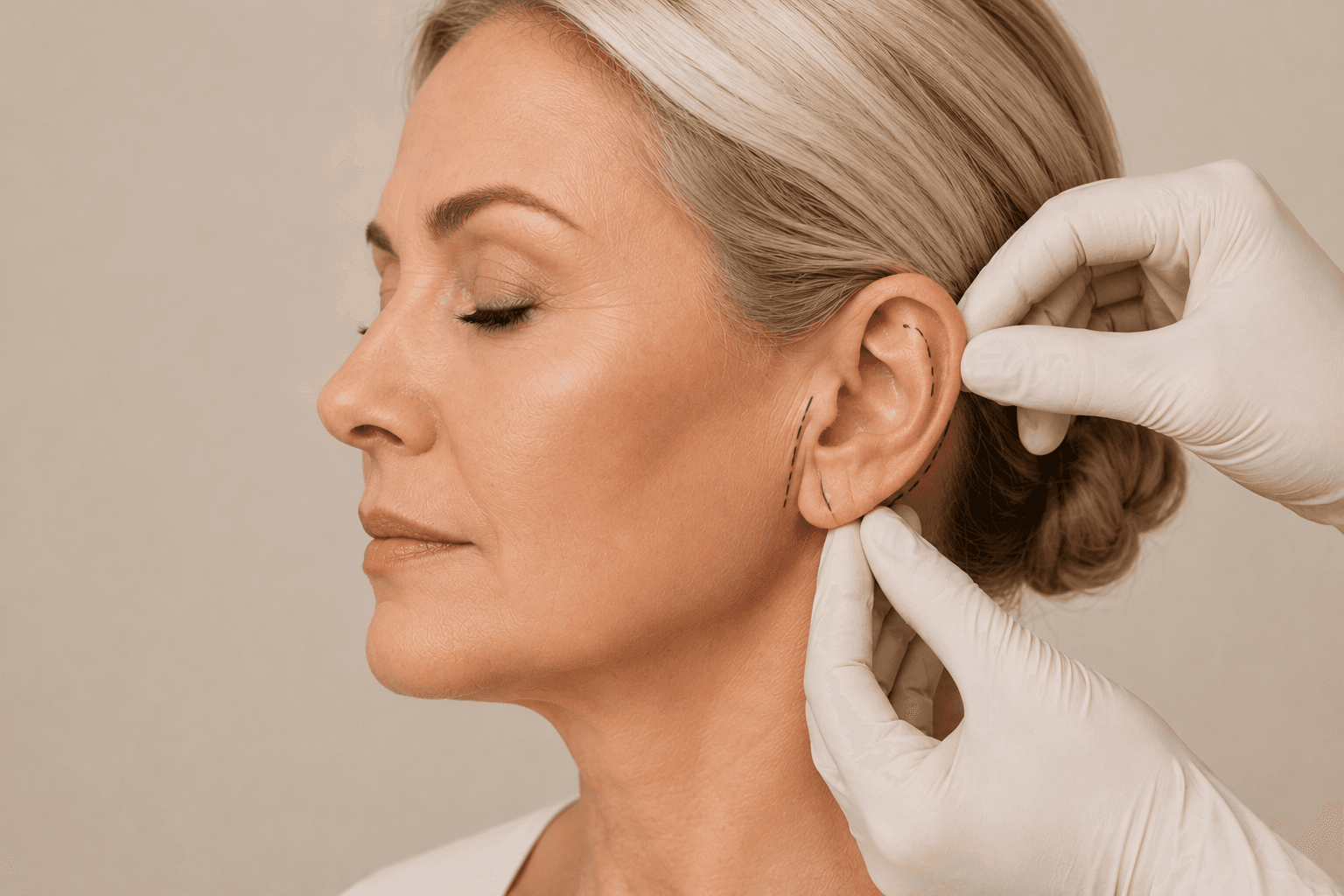
Incisions are usually placed around the ears and hairline to help conceal scarring. Your surgeon will explain the expected pattern for you.
Is a facelift right for me?
Only a consultation with a qualified clinician can establish this. Non-surgical options may sometimes be more appropriate.